
Why wood responds to humidity
Wood is composed of cellulose fibres arranged in a grain structure. These fibres absorb water molecules from the surrounding air through a process called adsorption — not to be confused with absorption, which involves liquid. Even sealed and finished wood exchanges moisture with its environment, though at a slower rate than untreated wood.
When wood absorbs moisture from humid air, its cell walls swell. When it dries, they contract. This cycling — swelling and shrinking — is responsible for most of the visible damage seen in wood floors over time. In temperate climates with seasonal variation, wood acclimatises to predictable ranges. In Singapore, where humidity stays persistently high year-round, the wood never has a chance to dry out fully and tends to remain in a chronically swollen state.
The critical measurement is the wood's Equilibrium Moisture Content (EMC) — the point at which the wood stops exchanging moisture with its surroundings. In Singapore, the EMC for interior wood is considerably higher than the 6–8% typical of air-conditioned spaces in temperate countries, often reaching 14–18% in naturally ventilated rooms.
The three failure modes: cupping, crowning, and buckling
Wood floor warping presents in three distinct patterns, each indicating a different moisture gradient across the floor:
Cupping occurs when the underside of a floorboard is wetter than the top surface. The edges rise while the centre sinks, producing a concave cross-section. This happens when moisture enters from below — through subfloor concrete, inadequate vapour barriers, or leaks — while the top surface remains relatively dry, often because of air conditioning above.
Crowning is the reverse: the top surface is wetter than the underside, causing the centre of each board to rise above the edges. This typically results from water exposure on the surface — mopping, condensation from poor air conditioning drainage, or high ambient humidity with insufficient ventilation below. Crowning can also appear as a temporary reversal when a cupped floor is sanded while still wet at its edges.
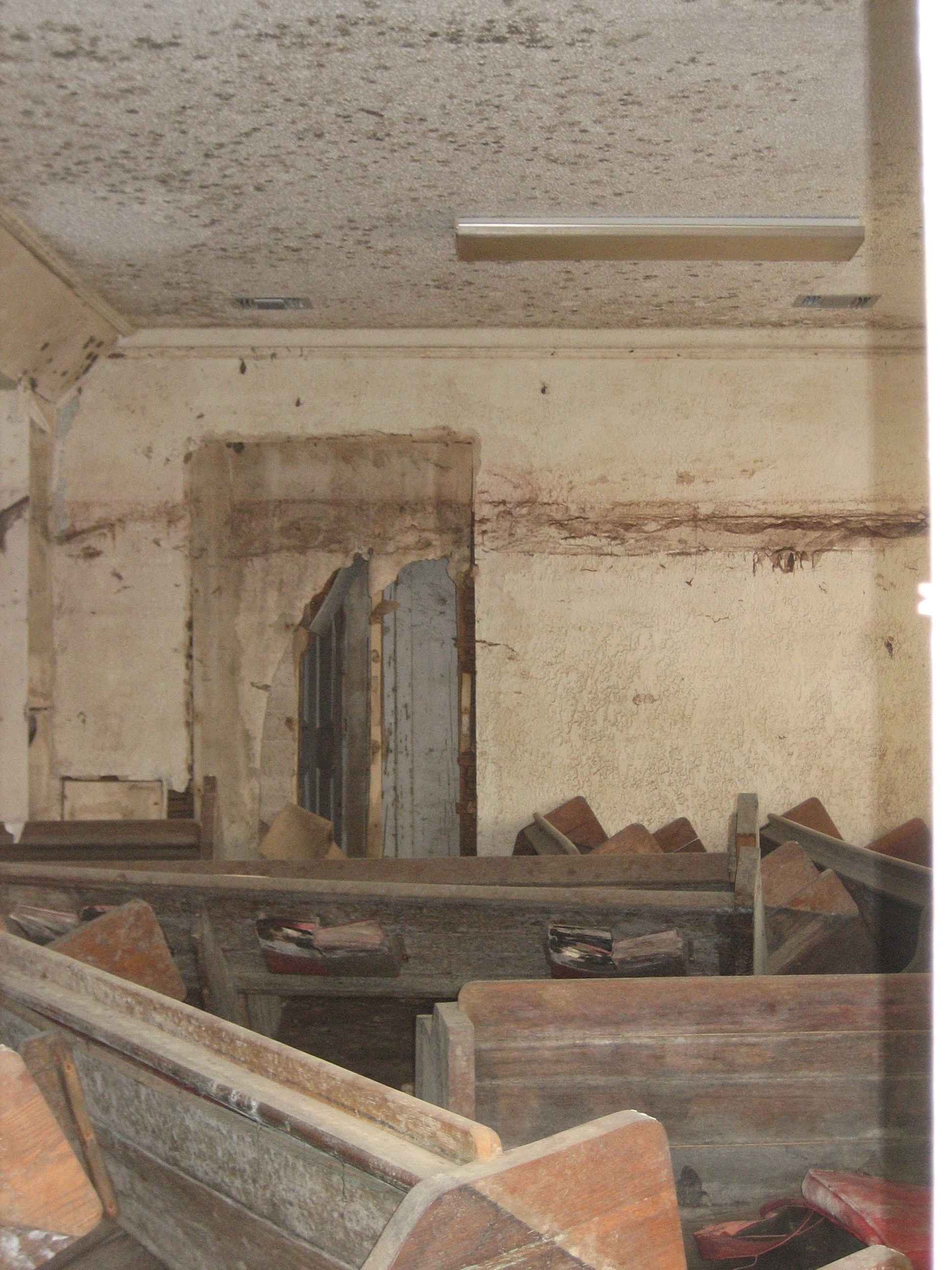
Buckling is the most severe form of failure. Entire boards lift off the subfloor, sometimes dramatically. This occurs when wood has expanded so significantly — from flooding, a plumbing leak, or sustained extreme humidity — that it has nowhere left to expand horizontally and releases the pressure by pulling out fasteners and lifting vertically.
Laminate and engineered wood: different vulnerabilities
Solid hardwood is not the only flooring type affected. Engineered wood — which uses a solid wood veneer over a plywood or HDF core — has better dimensional stability than solid wood because the cross-layered core resists expansion in most directions. However, the exposed veneer and the edges of the planks remain vulnerable to moisture infiltration, and the adhesive used to bond layers can degrade over time in persistently humid conditions.
Laminate flooring uses a dense fibreboard core with a photographic wood-effect layer laminated on top. The core reacts significantly to moisture, particularly at the edges and joints between planks. Water infiltrating through joints causes the fibreboard to swell, creating raised ridges at seam lines — a condition that is not repairable and typically requires full panel replacement.
What happens in Singapore specifically
Singapore's climate creates a specific problem that differs from humid-season issues in temperate countries: there is no dry season that allows floors to dry out and contract back to baseline dimensions. The sustained high humidity means wood floors that have swollen in their first wet season remain slightly swollen indefinitely, with annual variation adding incremental stress to an already expanded structure.
Additionally, the combination of air conditioning and natural ventilation that most Singapore residents use creates extreme moisture gradients within the same home. An air-conditioned bedroom may maintain 55% RH while an adjacent living room with an open balcony door sits at 80%. Wood flooring crossing these zones develops stress fractures at the interface.
Prevention and mitigation
Preventing wood floor warping in Singapore requires addressing moisture from three directions:
From below: Ensure a continuous vapour barrier between the concrete subfloor and any wood flooring. Floating floors should use an underlay rated for humid climates. Direct-glue installations require a waterproof adhesive and moisture testing of the subfloor before installation (a concrete subfloor should read below 4.5% moisture content on a surface probe, or below 75% relative humidity in a sealed test).
From above: Avoid wet mopping. Use a barely damp cloth, dry immediately, and ensure AC condensate drains are clear and not leaking onto floor surfaces. Address any plumbing drips in kitchens and bathrooms before they reach floor level.
From the air: Maintain indoor humidity below 65% using a combination of air conditioning and dehumidification. Consistent climate management is more effective than intermittent intervention — a floor that is repeatedly wetted and dried experiences more cumulative damage than one maintained at stable, slightly elevated humidity.
When to replace rather than repair
Cupped floors that have not yet been sanded can sometimes recover when the moisture source is eliminated and humidity is brought under control. Recovery takes months, not weeks, and may be incomplete. Crowning that results from premature sanding of a wet cupped floor typically worsens over time and requires replacement.
Buckled floors — those that have lifted off the subfloor — almost always require replacement of the affected sections. The structural integrity of fastener holes and tongue-and-groove joints is compromised once boards have buckled, and regluing or renailing rarely produces an acceptable result.
For laminate floors with swollen edges and raised seams, replacement is the only effective remedy. The fibreboard core does not recover meaningfully once it has absorbed sufficient moisture to swell.